

Consulting & Training That Actually Engages People
Using a collaborative storytelling approach to build creative, resilient, and emotionally safe environments
You’re doing important work, but engagement is hard to sustain.
Running groups or trainings that feel flat or inconsistent
Struggling to turn ideas into real-world skill building
Looking for approaches that actually connect with people
Wanting to build stronger collaboration, not just deliver content
We help you build engaging, structured, and human-centered programs
At Resilience Quest, we use a collaborative storytelling approach to help teams, clinicians, and organizations create experiences that people actually connect with.
Less passive participation
More meaningful engagement
Skills that translate beyond the room

A different way to teach, facilitate, and lead
We combine structured facilitation, story-driven interaction, and real-time skill practice.
• Practice communication instead of just hearing about it
• Build confidence through experience
• Strengthen connection and trust
• Apply what they learn in real-world settings

Training & Professional Development
Learn practical tools, experience the model firsthand, and build confidence facilitating engaging groups.
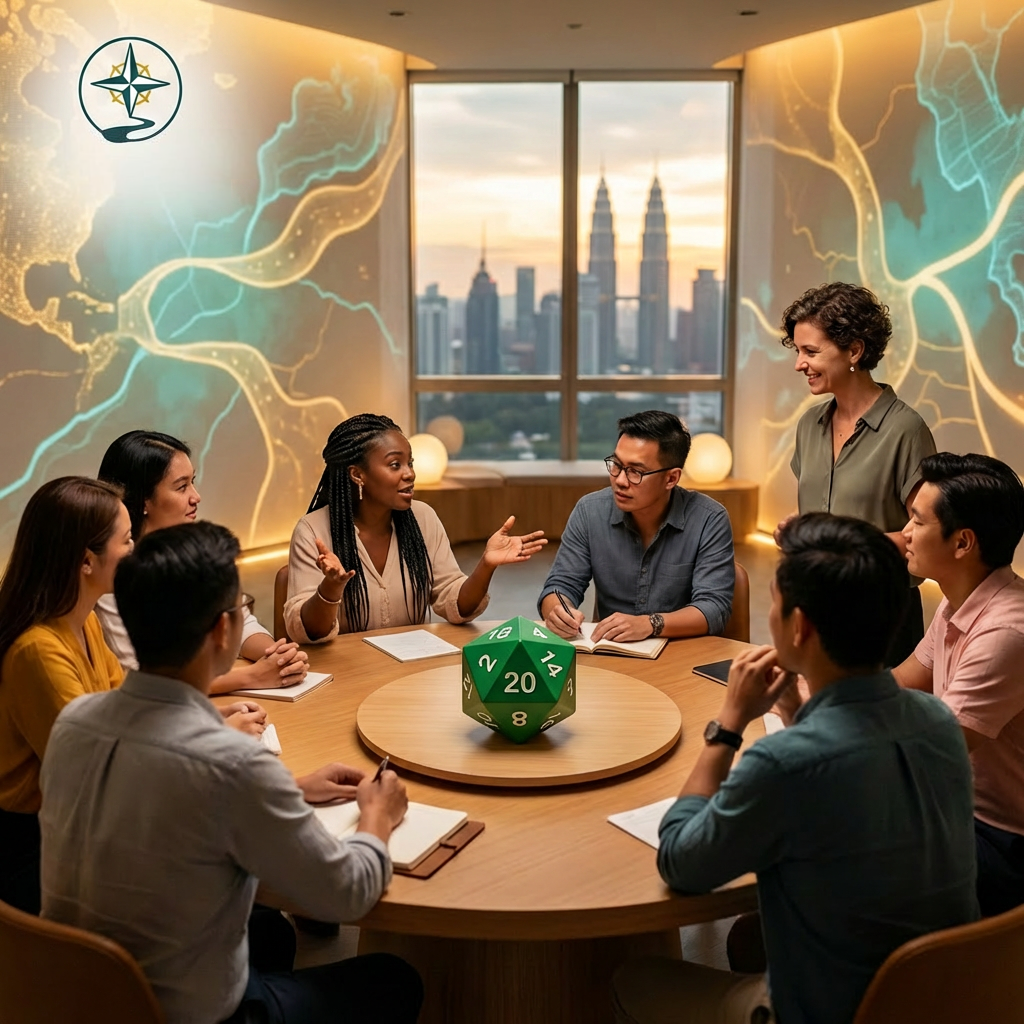
Workshops & Team Experiences
Strengthen communication, build trust, and create shared, meaningful experiences for your team.

Consulting & Program Development
Design, refine, and implement programs that actually work in real-world settings.
Frequently Asked Questions
*
Frequently Asked Questions *
-
Trauma-informed roleplaying game consulting supports clinicians, schools, and organizations in integrating tabletop roleplaying games into therapeutic or educational settings in ethical, structured, and developmentally appropriate ways.
At Resilience Quest, consulting is grounded in the Collaborative Storytelling Model (CSM) and the Clinical Collaborative Storytelling Framework (CCSF), ensuring that creativity is always paired with consent, agency, and clinical responsibility.
This is not about “just playing a game.” It is about building emotionally safe containers where narrative, regulation, and connection can support growth.
-
Ethical integration begins with structure.
Roleplaying games should be anchored in:
Clear clinical goals
Trauma-informed safety tools
Defined therapeutic boundaries
Scope of practice awareness
Informed consent
Resilience Quest provides consulting and supervision to help clinicians translate imaginative play into measurable treatment goals aligned with trauma modalities such as ARC, ACT, CBT, DBT, IFS, and Narrative Therapy.
We help you move from idea to implementation without losing clinical integrity.
-
Yes.
The Learning Forge at Resilience Quest offers tiered training for clinicians, schools, and nonprofits who want structured guidance in therapeutic TTRPG integration.
Trainings cover:
Trauma-informed foundations
Session design and pacing
Safety tools and co-regulation
Treatment planning and documentation
Ethical use of metaphor and narrative distance
Managing dysregulation and crisis moments
This training is designed for licensed clinicians, pre-licensed clinicians under supervision, and organizations seeking to build sustainable programming.
-
When implemented thoughtfully and clinically, roleplaying games can support:
Emotional regulation
Social connection
Narrative re-authoring
Agency restoration
Identity exploration
Skill rehearsal
Within a trauma-informed framework, roleplaying becomes a structured method for practicing safety, connection, and authorship in a contained environment.
The goal is not escapism. The goal is integration.
-
Resilience Quest is built on an original theoretical framework.
The Collaborative Storytelling Model (CSM) provides the overarching philosophy of agency, authorship, and collaboration across clinical and systems contexts.
The Clinical Collaborative Storytelling Framework (CCSF) is the trauma-informed clinical application used in therapy and consultation.
This means:
You are not receiving isolated activity ideas
You are receiving a structured, ethically grounded model
You are learning how story functions as a mechanism of change
We train clinicians to think in story, not just run a game.
-
Yes.
Resilience Quest offers individual and group clinical consultation for clinicians developing therapeutic roleplaying groups.
Consultation can include:
Case conceptualization using narrative frameworks
Session structure refinement
Crisis and dysregulation support planning
Treatment plan integration
Documentation guidance
Ethical decision-making support
Consultation is collaborative and tailored to your population and setting.
-
Yes.
Clinical supervision is available for clinicians interested in integrating trauma-informed storytelling, play-based interventions, and therapeutic TTRPG models into their practice.
Supervision includes:
Clinical case review
Trauma modality integration
Ethical considerations in creative therapy
Professional identity development
Power, consent, and authorship exploration in clinical work
Supervision is grounded in trauma-informed principles and relational accountability.
-
Implementation begins with assessment and alignment.
Resilience Quest consulting for schools and nonprofits includes:
Staff training in trauma-informed creative interventions
Group structure design
Safety protocol development
Alignment with SEL or therapeutic goals
Ongoing consulting for sustainability
The goal is not just to start a program. The goal is to build one that lasts and protects both facilitators and participants.
-
Narrative Therapy focuses on externalizing problems and re-authoring personal stories.
The Collaborative Storytelling Model expands beyond therapy into systems, leadership, and conflict work while maintaining agency and consent as core tenets.
The Clinical Collaborative Storytelling Framework applies these principles specifically within trauma-informed clinical settings.
In short:
Narrative Therapy is a modality
CCSF is a trauma-informed clinical framework
CSM is the overarching model that supports both
-
Consulting helps address common challenges such as:
Difficulty engaging resistant teens
High dropout rates in group therapy
Clinician burnout
Lack of structure in creative interventions
Ethical concerns around play-based therapy
Unclear treatment planning with experiential work
By pairing structure with imagination, clinicians gain clarity and confidence.
-
You can begin by:
Scheduling a consultation
Enrolling in a Learning Forge training tier
Requesting organizational consulting
Inquiring about clinical supervision
Guidance Quest is designed as a choose-your-adventure pathway. Whether you are a clinician building a group, a school developing programming, or an organization navigating story-based conflict work, there is a path forward.
Referral Form
Interested in therapy or consulting? Fill out some info and we will be in touch shortly! We can't wait to hear from you!